Science & Space
Why Do Stars Twinkle—but Planets Usually Don’t?
Discover how Earth’s atmosphere makes distant stars flicker, why planets usually look steadier, and how astronomers correct atmospheric distortion.

Discover how Earth’s atmosphere makes distant stars flicker, why planets usually look steadier, and how astronomers correct atmospheric distortion.

Explore how water’s molecular structure makes ordinary ice less dense than liquid water, why most of a floating cube stays underwater, and why this matters for lakes.
Discover how gravity shapes planets, why small asteroids can remain irregular, and why even Earth is not a perfect sphere.
Discover what the Moon illusion reveals about visual perception, why the atmosphere is not magnifying the Moon, and how to test the effect.
Explore how sunlight and water droplets create rainbow colors, why the bow is curved, and what produces a double rainbow.

Discover where ocean salt comes from, why rivers usually taste fresh, and how evaporation and the seafloor shape seawater.
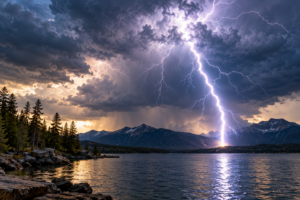
The short answer Lightning is an electrical discharge that occurs when strong electric fields allow a conducting path to develop through air. In thunderstorms, interactions

The short answer Scientists estimate Earth’s age at about 4.54 billion years by measuring radioactive isotopes and their decay products. Meteorites provide especially important evidence

The short answer At sunset, sunlight travels through a longer stretch of atmosphere before reaching you. Air molecules scatter shorter wavelengths, including blue, more strongly
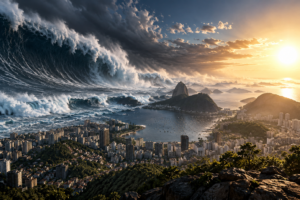
The short answer If Earth’s solid surface abruptly stopped rotating while the atmosphere, oceans, and objects retained their motion, the consequences would be catastrophic. Near