
Body & Mind
Why Do We Blink So Often?
Explore how blinking maintains the tear film, protects the eyes, and interacts with the brain’s ability to keep visual experience feeling continuous.

Explore how blinking maintains the tear film, protects the eyes, and interacts with the brain’s ability to keep visual experience feeling continuous.

Discover how wet and dry moats added layers of defense, controlled access, and became part of the changing landscapes around castles.

Explore how bats use returning echoes to detect obstacles and prey, why they adjust their calls, and why echolocation does not mean they are blind.

Discover how scanners turn patterns of bars and spaces into data, why a product’s price is usually stored elsewhere, and what makes a code difficult to read.

Explore how water’s molecular structure makes ordinary ice less dense than liquid water, why most of a floating cube stays underwater, and why this matters for lakes.

Discover how tiny muscles raise body hairs in the cold, why that response matters more in furry mammals, and what research reveals about hair follicles.

Explore how movable type changed the production of books, expanded the circulation of ideas, and reshaped communication without making knowledge instantly universal.
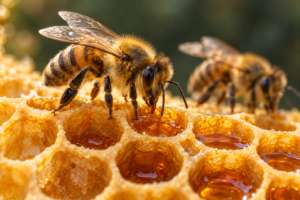
Follow nectar from a flower to a wax-capped cell and discover how honey bees use enzymes, teamwork, and evaporation to make honey.

Explore how motion sensors, presence detectors, and electronic controllers work together to open automatic doors and manage the doorway.

Discover how gravity shapes planets, why small asteroids can remain irregular, and why even Earth is not a perfect sphere.