How Do Giant Trees Get Water to Their Highest Leaves?
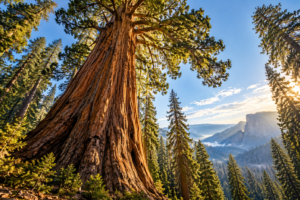
The short answer Giant trees move water upward mainly through a process called cohesion-tension. Water evaporating from leaves creates tension in the tree’s water-conducting tissue,


The short answer Giant trees move water upward mainly through a process called cohesion-tension. Water evaporating from leaves creates tension in the tree’s water-conducting tissue,

The short answer Some organisms produce light through chemical reactions, a process called bioluminescence. Depending on the species, this light can help attract mates or

The short answer At sunset, sunlight travels through a longer stretch of atmosphere before reaching you. Air molecules scatter shorter wavelengths, including blue, more strongly

The short answer If Earth’s solid surface abruptly stopped rotating while the atmosphere, oceans, and objects retained their motion, the consequences would be catastrophic. Near

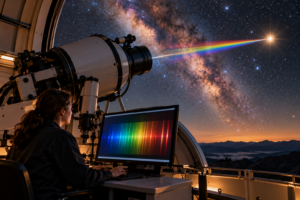
The short answer Scientists analyze starlight using spectroscopy. By separating the light into wavelengths, they reveal patterns associated with particular atoms, ions, and molecules. Comparing

The short answer Time does not pass differently simply because someone is “in space.” According to relativity, elapsed time depends on motion and gravity. Clocks

The short answer People used a mixture of natural rhythms, household help, community signals, and timekeeping devices. Some relied on daylight or another person already

The short answer The deepest ocean contains trenches, sediment-covered seafloors, microorganisms, and animals adapted to darkness, cold, and immense pressure. Life includes scavenging crustaceans, sea

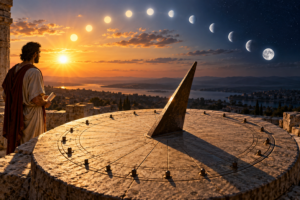
The short answer The 24-hour day has roots in ancient Egyptian timekeeping, which divided daylight and nighttime into twelve parts each. Those early hours were

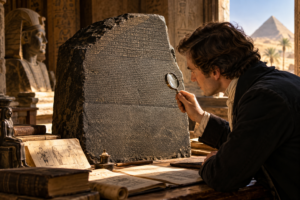
The short answer The Rosetta Stone records versions of the same decree in three scripts: Egyptian hieroglyphs, Demotic, and ancient Greek. Because scholars could read